

Members of the public are invited to join the Bridlington RNLI as the 155th Great Gale is remembered with a service and commemoration at the Priory Chuch.
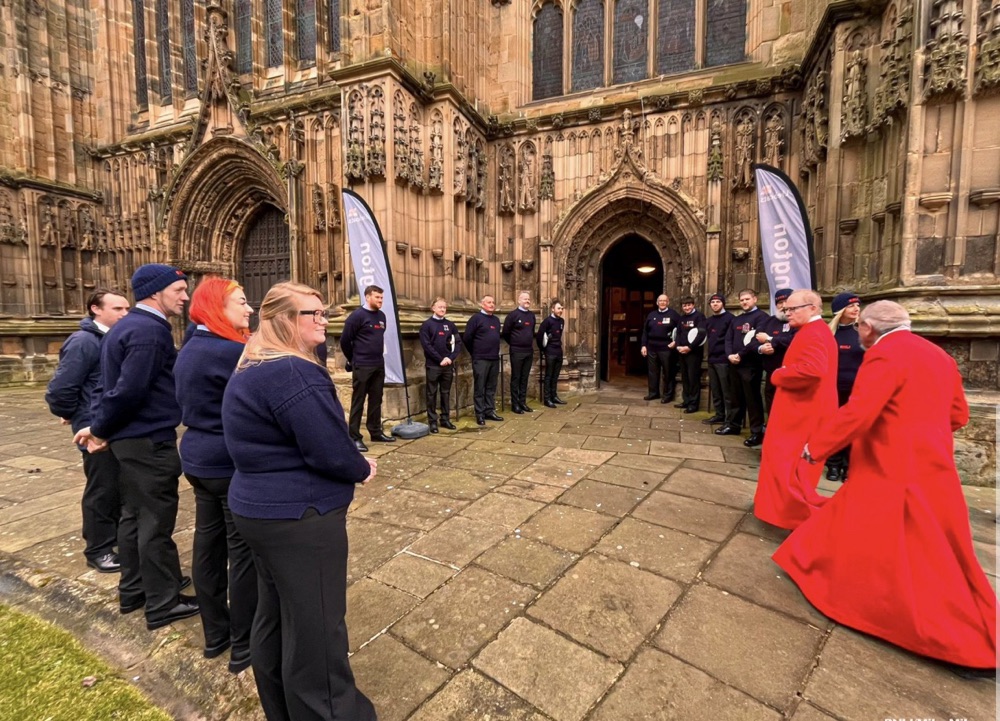
The volunteer crew of Bridlington RNLI will once again be returning to Bridlington Priory Church on Sunday 8 February 2026. They will be joining the congregation, together with the HM Coastguards, other members of the fishing and harbour communities and other town dignitaries, in remembering those lost on that fateful day, a day that will never be forgotten.
155 years ago, Bridlington witnessed one of the worst maritime disasters to ever hit the North East coast. On Friday 10 February 1871, the so called ‘Bay of Refuge’ was witness to the storm that affected not only the town, but many other seafarers who had taken shelter in the bay, to escape the worst of the winter weather that had ravaged the coast in the early part of that year.

The weather at the start of 1871 had not been favourable, and a fleet of around 400 vessels were waiting in the Tyne for a change in the weather so they could sail south, with their cargoes, primarily of coal, destined for Paris and London. Then on 9 February they finally got the break in the weather they needed and the vast fleet headed south. As evening approached, the wind carrying them on their passage died away as they reached the East Yorkshire coast, so many of the vessel’s decided to take shelter in Bridlington Bay, however this was to be a huge mistake.
Unexpectedly, in the early hours of 10 February, the wind started to rise, slowly at first but by daybreak it had increased to a full blown south easterly gale worsened by heavy sleet and snow. By now the weather had deteriorated to such an extent that the town’s two lifeboats were made ready, as was the local rocket apparatus. It was now only a matter of time before the lifeboats and equipment would be needed.
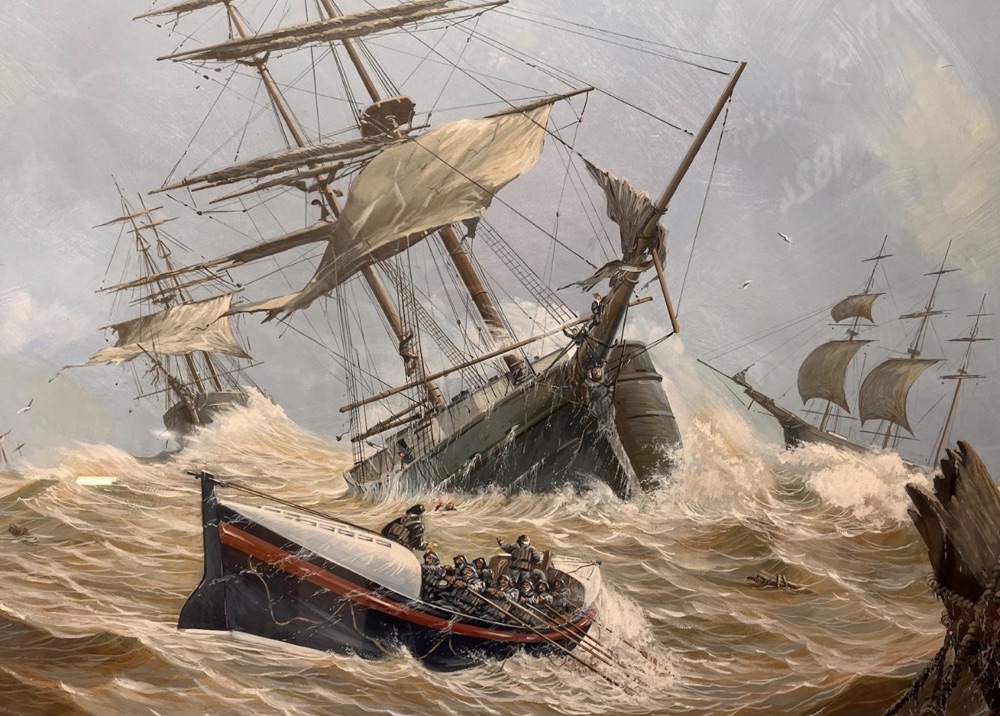
Shortly after 10am, the Masters of five of the vessels decided to make a run for the beach rather than await the fate of sinking whilst at anchor. All attempted to set off to land on the south beach, however the wind blew them off course and all struck land close to the harbour. As the day progressed, the sea became even more ferocious, showing no mercy to the ships in the bay and over 30 vessels were lost during the storm. Many of the vessels were wrecked after hitting the sea walls, with the sea gathering more ferocity, with many of the crews perishing.
In 1871, Bridlington had at its disposal two lifeboats, the RNLI’s Robert Whitworth II, which had launched several times saving the crews of three vessels, and the Harbinger, a private lifeboat owned by local fishermen, which had also set out on numerous occasions that day. By mid afternoon, the lifeboat Harbinger put out once again into atrocious conditions to go to the aid of a brig, Delta, that was in serious trouble. Tragically, as the Harbinger was attempting to save the crew, a wave capsized the lifeboat and six of the nine local men onboard were drowned. The six brave crew of theHarbinger who were lost were, Robert Pickering, John Clappison, Richard Atkin, James Watson, David Purdon and William Cobb. Four of the crew of the brig Delta, including the Captain, were also lost to the sea during the storm.

Another vessel to suffer many losses that day, was the brig Produce, which was driven ashore close to the North Pier. Two of its crew lowered a boat to escape the brig but were swamped almost immediately, with one man drowning within minutes, the other man tried to swim to the pier, but he was also lost to the storm. Another four of the crew fromProduce were also lost that day. During the storm many other ships suffered similar fates as the loss of vessel’s grew and many people succumbed to the storm.
In 1935, the RNLI Lifeboat Magazine reported the following in relation to the annual service at Bridlington Priory Church that year, which read ‘This year, as for many years past, Bridlington held a memorial service for the six Bridlington lifeboat men who lost their lives in the great gale of 10 February 1871. An additional interest was given to the service this year by the fact that in January the remains of a boat were found by a Mr. Alfred Hudson, of Bridlington, at Kirkham Abbey on the Derwent, and these remains are thought to be the Harbinger, from which the lifeboatmen were lost. It is known that after the gale the Harbinger lay for some time in the harbour at Bridlington, and then went to Stamford Bridge on the river Derwent, being converted into a houseboat. The remains found by Mr Hudson were little more than a skeleton and were being broken up for firewood. A very sad end to a lifeboat that gave so much on that horrific day in 1871.’
The Reverend Neil Bowler, Rector of Bridlington Priory, said ‘The Great Gale service here at Bridlington Priory is embedded in our community, as a way of remembering the tragedy that happened when so many lost their lives, but also is an opportunity to give thanks for the bravery of the men and women who risk their lives, and in some cases have lost their lives, across the generations, in attempting to save lives at sea. This year we will be giving thanks for all the different organisations who work so closely together to try to make our seas and coastline as safe as is possible. It will be, once again, a privilege for me to lead this very special service in the life of our town and wider community.’
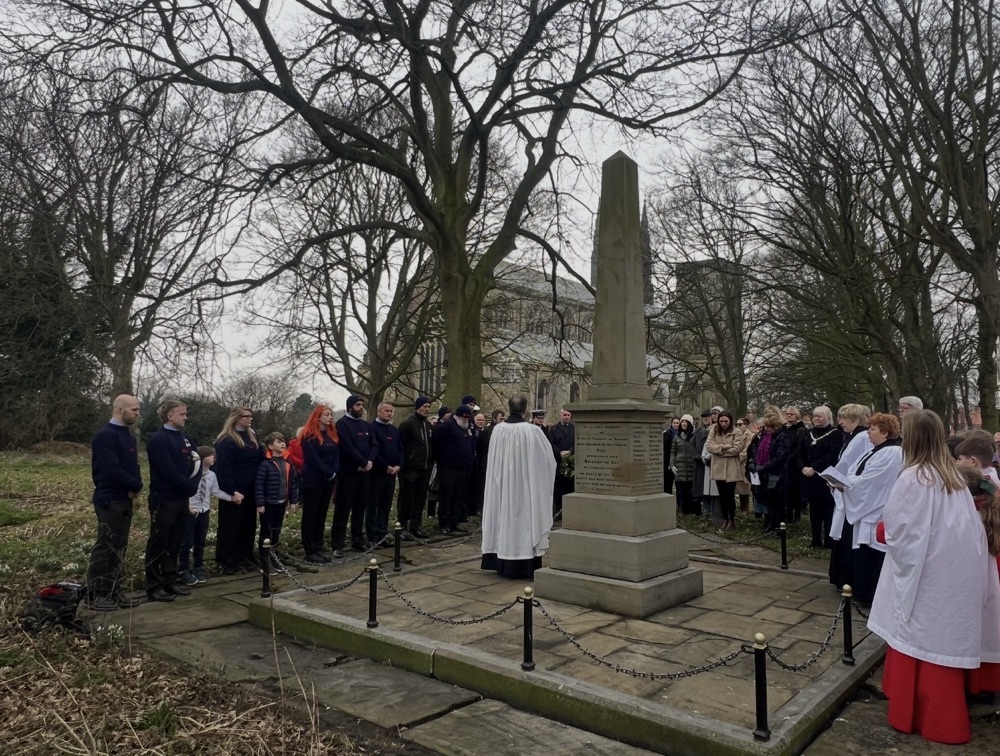
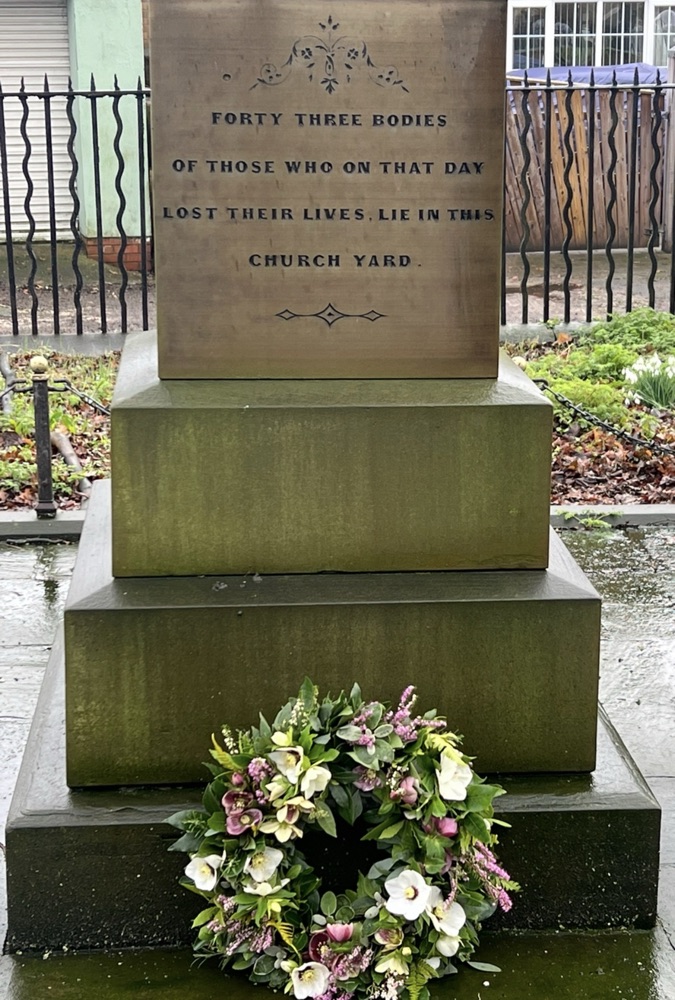
After the service, the Reverend, volunteers from Bridlington Lifeboat and the congregation, will attend a memorial in Bridlington Priory Churchyard that commemorates 43 burials there, as well as the graves of the volunteer crew of the lifeboatHarbinger, who are also buried in separate graves in the Priory Churchyard.
Andy Rodgers MBE, Bridlington RNLI Coxswain, said: “The 10th of February 1871 is a date that is woven deeply into the heart of Bridlington. In a community shaped by the sea for centuries, the events of that day still echo through the generations. Many families in the town today carry the names, the stories and the memories of loved ones who were lost, and of those who bravely fought to save others whether out on the raging waters or along the windswept shoreline. The people of Bridlington witnessed the raw and unforgiving force of Mother Nature in a way that changed this town forever.
That is why we must never allow the sacrifices made 155 years ago to fade from our collective memory. Every year, the community comes together not out of duty, but out of love and respect to honour those who gave everything so that others might live. Bridlington RNLI stands alongside many other organisations at the Priory Church, laying wreaths, offering prayers to ensure that all the souls are remembered with the dignity they deserve.

I would like to express my deepest gratitude to everyone who supports Bridlington RNLI. Your kindness, your generosity, and your belief in what we do mean more than words can say. Every act of support helps us continue our mission: to be there, just as they were ready to save lives at sea.’
The disaster led MP and social reformer Samuel Plimsoll, who ironically was born on the 10 February, to petition Parliament to introduce a new law to prevent ships being dangerously overladen, by introducing the painting of a load line on the hull. ‘Plimsoll Lines’ as they became known, are still used in international shipping to this day.
