

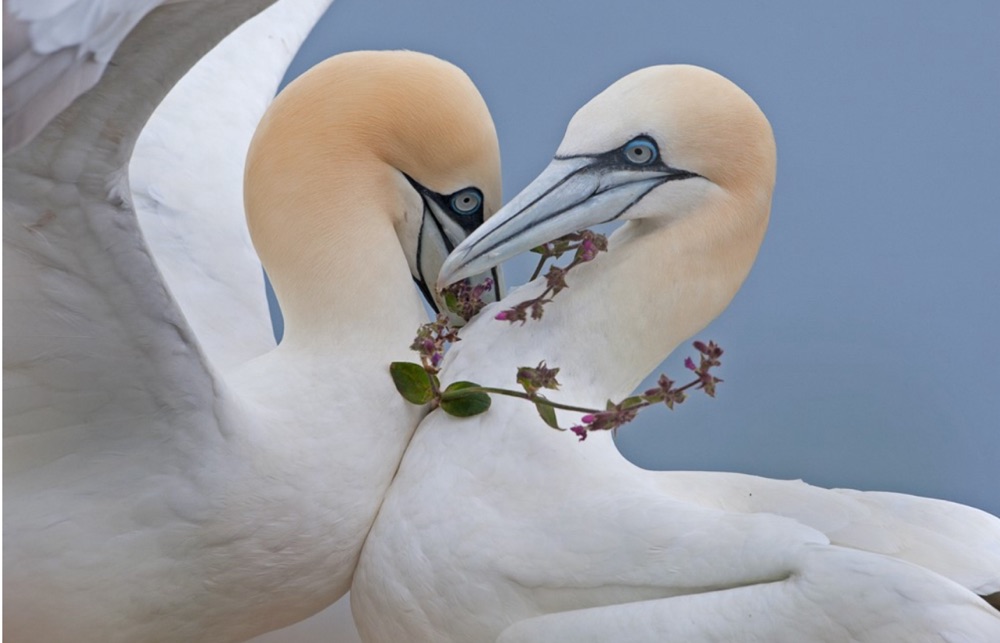
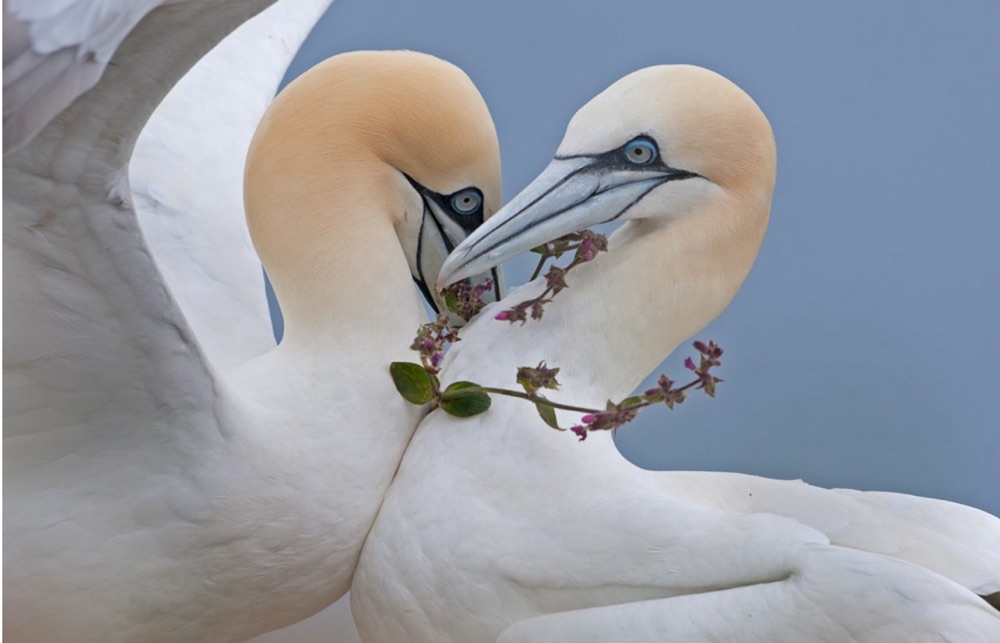
Gannets, Britain’s largest seabirds, are migrating to Bempton after wintering out at sea. Breeding birds have already arrived back on the cliffs and the younger (non-breeding) birds are on their way back from as far away as West Africa and the Bay of Biscay.

- Gannets are arriving back to East Yorkshire and these charismatic birds are currently pairing up for the breeding season.
- Numbers of breeding pairs of Gannets at Bempton (2024) were at 15,794.
- Despite the good news, the threat of avian influenza remains.
- GPS tracking offers an insight into their ‘secret’ offshore lives.
- Gannets are the largest seabird in the UK – and there’s no other place in England you can see them so closely.
- Conservationists are celebrating their return to England’s largest mainland seabird colony.
Gannets at Bempton were impacted by avian influenza in 2022 and with the disease being regularly reported in UK wild birds there is a possibility of outbreaks in seabirds again this year. However, the hope is that if enough Gannets at the colony have some immunity from prior exposure, it might protect against large-scale outbreaks. Conservationists are hoping too that the good numbers of breeding pairs offer hope for a good breeding season ahead.

RSPB Bempton Cliffs is renowned for its Puffin colony, but it is also the only mainland breeding colony of Gannets in England, with thousands of them pairing up for the breeding season every year. Gannets are known for their impressive diving skills as they plunge into the North Sea for fish, using their internal nostrils to help them dive at amazing speeds reaching up to 60 miles per hour. Their wingspans have been recorded at up to 6.6 feet, making them especially impressive to watch in flight. They are also known for their lifelong pair bonding, returning to the same nest every year to raise their young.
Scientists have already discovered that Gannets with black irises have survived infection with avian influenza. This is important because it showed that not all the birds which caught the virus died. And new data has shown that in some instances 50% of the Gannets studied in a single monitoring plot at Bempton had these black irises.
That isn’t the only seabird research taking place at Bempton. GPS tracking (small GPS devices attached to adult Gannets) is being used to help conservationists understand where the birds go and what they are doing when they are not at the Bempton colony.
Results of this work show that some breeding birds are reaching as far as the Netherlands on one single journey and are then coming back to feed their chick – this was the longest flight yet recorded at Bempton.

Saskia Wischnewski, RSPB Conservation Scientist, said: “Trying to understand the mystery of what the birds are doing when they are not at Bempton is fascinating work. The GPS devices will give us new data on where they go to and where they are foraging for food. So far it has been amazing to discover the incredible distances the birds are covering.”
As well as GPS tracking, reserve volunteers also monitor a sample of 250 nests weekly and track year on year numbers. Figures revealed today (from a 2024 census) show that Gannet numbers at Bempton were at 15,794 breeding pairs in 2024. As Gannets don’t typically breed until they are five years old, new breeders this year are likely to be birds fledged in 2020, before avian influenza hit the colony. However, as Gannets are long-lived, take several years to reach breeding age and lay only one egg, it’s expected that it could take many years for populations to recover from the impacts of avian flu.
RSPB experts caution that the threat from avian flu remains and conservationists are watching the situation closely and ensuring preparedness for the possibility of outbreaks again this year. The hope, say experts, is that if enough of our vulnerable seabirds already exposed to avian flu have developed immunity, flock immunity might protect against large-scale outbreaks. Immunity though, wanes over time and the virus can change. Unexposed young birds may also be particularly susceptible.
Dave O’Hara, Senior Reserve Manager, RSPB Bempton Cliffs, said: “Every year, when we see the Gannets arriving back, we feel emotional to see them. It’s heartening to see good numbers of pairs at the colony. We’re not out of the woods yet though, and bird flu remains a threat.

“Our visitors travel from right across the UK and overseas to see these amazing birds and we shouldn’t take what we have here on the East Coast of Yorkshire for granted. Doing more to look after our marine environment has never been more important given the range of threats our seabirds face. We are looking forward to seeing the first Gannet eggs hatch late May and watching the chicks grow. We’re excited too to see what the results of the GPS tracking will bring over the coming years, learning more about our Gannets’ life at sea.”
Gannet populations were once decimated by human exploitation in the 18th and 19th centuries through hunting and their feathers were even used to stuff pillows. Fast track to today and there are now 28 colonies across Britain and Ireland, after years of conservation efforts to protect them.
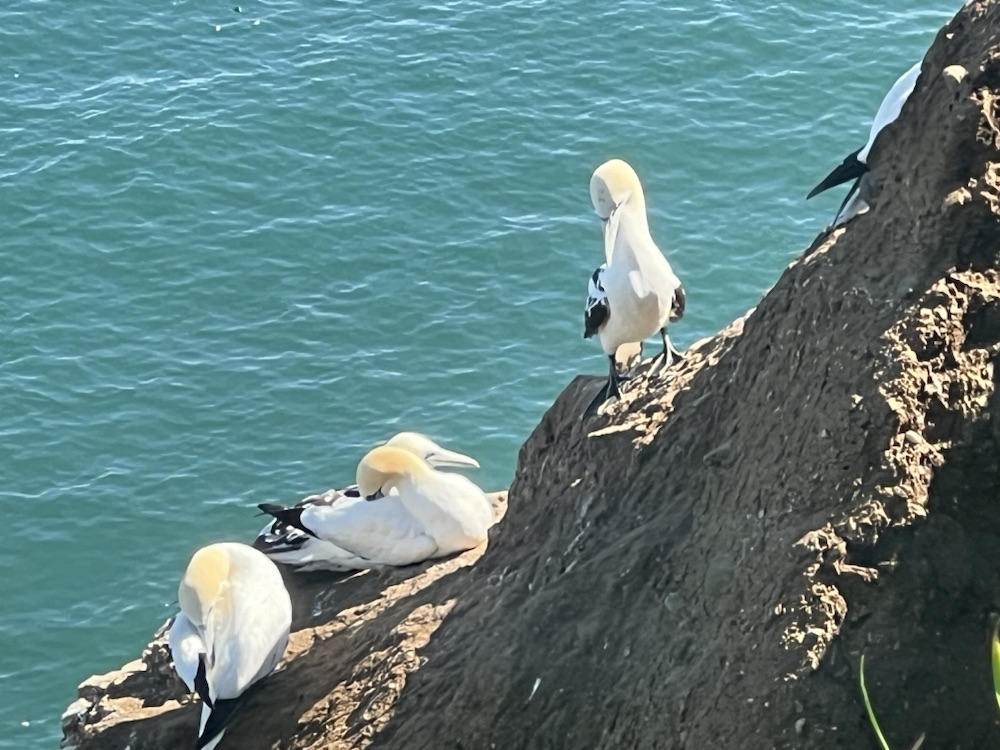
The biggest Gannet colony in the UK and the world is at the Bass Rock in East Lothian, Scotland. Gannets first colonised Bempton in the 1930’s but there were still only 21 pairs in 1969. Since then, numbers had increased year on year until the impact of bird flu in 2022.
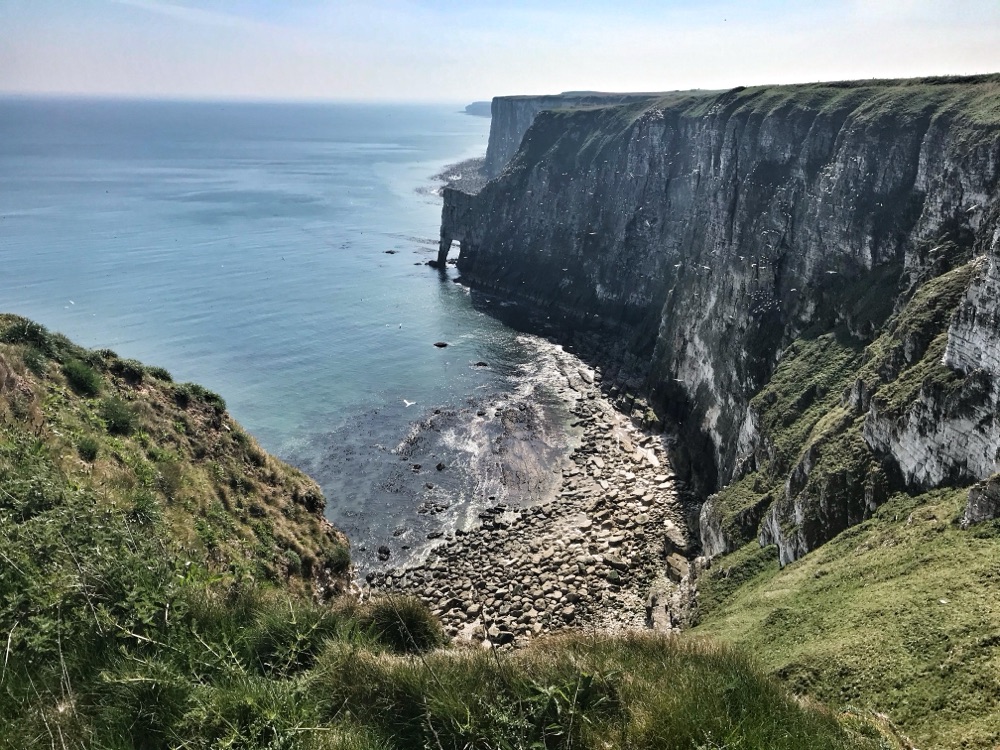
Situated on the dramatic Yorkshire East coast, around half a million seabirds, including Gannets, Kittiwakes, Guillemots and Razorbills as well as around 3,000 Puffins breed at RSPB Bempton Cliffs each year, on the dramatic 400 feet high chalk cliffs. Bempton’s internationally important seabird population means it has special protection. It is both a Site of Special Scientific Interest (SSSI) and its European importance is recognised in its designation as a Special Protection Area (SPA)
