

The clifftop wildlife reserve at Bempton that is home to thousands of seabirds and also many other species of birds and wildlife has seen the number of visitors increase rapidly in the past six months.

Steve Race © (Yorkshire Coast Nature).
RSPB Bempton Cliffs has announced record visitor numbers today with a whopping 31.15% increase compared to the same six months in the previous year (Jan – June). 91,667 visitors have been recorded so far this year, up from 69,666 in the same six months last year, meaning the reserve is on track to have its highest annual visitor figures ever.
- Visitor numbers to RSPB Bempton Cliffs have reached an all-time high.
- Footfall figures have increased by 31% compared to the same six months in the previous year (Jan-June)
- An additional 22,001 visitors have been recorded (first half of the year).
- A desire to re-connect with nature is bringing more visitors to the reserve.

The nature reserve has put its success down to a range of factors, including the seasonally good weather, offering the warmest of Yorkshire welcomes, as well as the impact of being showcased on national television. But reserve Visitor Experience Manager, Poppy Rummery, also believes the word is simply getting out that Bempton is a must-see visitor attraction on any trip to Yorkshire.
As well as record visitor numbers Bempton is also celebrating a 90% score in the annual VisitEngland quality assessments for visitor attractions. Bempton Cliffs was commended for its exceptional standards, easy to use website, warm visitor welcome and quality of the café. This means it has qualified for a nomination for a ‘Best Visitor Welcome’ accolade 2024/2025, and successful attractions will be notified late summer/early Autumn. Praise was also given for its outstanding accessibility for visitors with both visible and non-visible disabilities.

Open to visitors year-round, except for Christmas day, around half a million seabirds gather here between March and August to raise a family on the towering chalk cliffs that overlook the North Sea. Between April and July visitors find the cliffs transformed into England’s largest seabird colony. Here Puffins, Gannets, Kittiwakes and Guillemots live life on the edge and there are more Gannets acrobatically diving into the deep here than anywhere else on mainland England. When the seabirds leave, wild walks and dramatic seas draw visitors over the winter months too for the spectacular scenery and chance to spot Short-eared Owls hunting over the grassland.
Scott Davison-Smith, Commercial Operations Manager, said:

“We’re delighted with these visitor numbers. People are realising that getting away from their smart phones and computer screens is a brilliant way to relax and that nature can be so restorative. They just want to re-connect with nature and what better way to do it than visit the only place in Yorkshire where you can see this amazing seabird spectacle. Receiving a 90% score from VisitEngland’s annual quality assessment is the icing on the cake.”
“It’s heartening too to know that our visitors want to help make a difference for nature. Doing more to look after our marine environment has never been more important given the range of threats our seabirds face and every visit made helps us to conserve the special wildlife here”.

Poppy added:
“Not only have we seen good numbers of Gannets and other seabirds here, but we also now have the best visitor figures ever! We used to be a hidden gem but now the word is well and truly out, and people are traveling from the UK and right across Europe to see these amazing birds. We’ve had people from Holland, Germany and even Australia!”
Right now, the Gannets are diving into the sea, bringing food back for their chicks and August will be the perfect time to spot Minke Whales and Dolphins too.

Whilst Bempton is celebrating the visitor figures Davison-Smith has cautioned it’s important people understand not everything is well with our seabird populations. The most recent *seabird census, published in November 2023, found that more than half (62%) of the seabird species on British and Irish coasts have declined over the last 20 years. And, shockingly, around one in four Puffins have been lost from across the UK since 2000.
He explained: “This is one of the reasons why visitor support for Bempton is so vital. When people visit us, they learn more about the threats seabirds are facing and help support our crucial conservation work here, including monitoring of species. Almost half of our seabird populations are in decline but when we act, they can recover.”

Bempton’s internationally important seabird population means it has special protection. It is both a Site of Special Scientific Interest (SSSI) and its European importance is recognised in its designation as a Special Protection Area (SPA) and a Special Area of Conservation (SAC). It is renowned for its Puffin colony, but it is also the only mainland breeding colony of Gannets in England.
As well as the nature reserve, Bempton has a Visitor Centre, shop and café (serving bird friendly coffee of course) and has increased its range of events for the summer season. 2025 marks the tenth anniversary of the opening of the Visitor Centre, made possible through the National Lottery Heritage Fund.

Dave O’Hara, Reserve Manager, RSPB Bempton Cliffs, said:
“We’re delighted with these results. We have a loyal following of visitors from across Yorkshire and increasingly from across the country and overseas. It’s this support that helps us do more to protect our seabird populations, such as our successful campaign to end industrial Sandeel fishing in the North Sea. Thanks to this, our Puffins and other seabirds have finally been given a much-needed lifeline.”
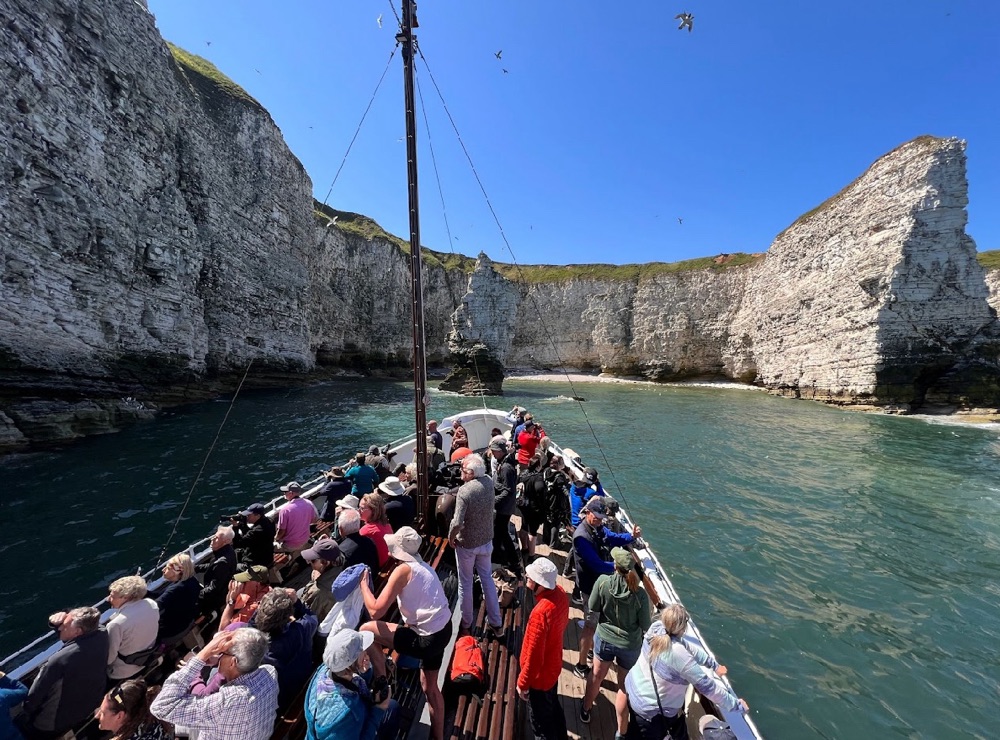
Every year from May to September, spectacular seabird cruises run from nearby Bridlington Harbour. The boat tours take visitors to the seabird colony for close-up views of Puffins, Gannets, Guillemots and more. RSPB’s conservation work at Bempton is supported by a team of around 70 volunteers. From practical conservation work to welcoming visitors or carrying out wildlife surveys
